MAY 2025 - JANUARY 2026
YOU CANNOT SAY GOODBYE TO A MYTH
FOLKERT DE JONG IN DIALOGUE WITH WORKS FROM THE REINKING COLLECTION
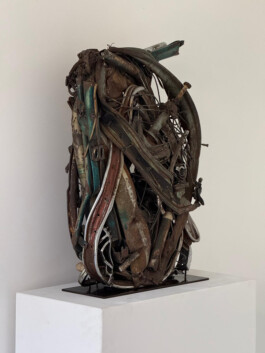
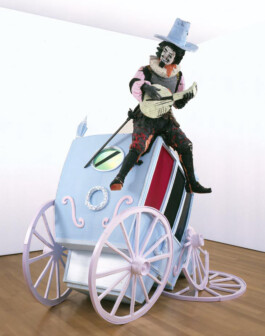
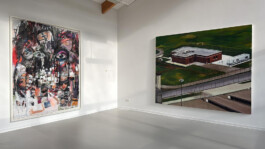
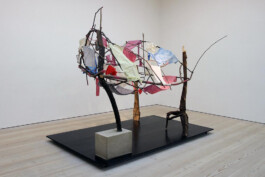
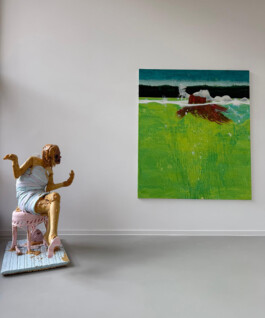
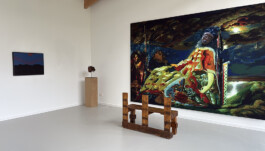
Works by the following artists can be seen:
Steven Allan, Hermine Anthoine, Arman, Joseph Beuys, Alexandra Bircken, Jonathan Borofsky, Michael Buthe, Lawrence Caroll, César, Dinos & Jake Chapman, Mat Collishaw, Henry Coombes, Folkert de Jong, Madeleine Dietz, Felix Droese, Francois Dufrene, Jimmie Durham, Henrik Eiben, Frida Collective, Pachet Fulmen, Barnaby Furnas, Anna Gaskell, Isa Genzken, Till Gerhard, Rodney Graham, Jessica Jackson Hutchins, Son Jongjun, Edward Kienholz, Henning Kles, Douglas Kolk, Josephine Meckseper, Seung Ah Paik, Wolfgang Petrick, Mirko Reisser, Kirstine Roepstorff, Karl-Heinz Rummeny, Reiner Ruthenbeck, Werner Schreib, Markus Selg, Dirk Skreber, Agathe Snow, Daniel Spoerri, Dimitris Tzamouranis, Timm Ulrichs, Ben Vautier, Jacques Villegle, Wolf Vostell, Kelley Walker und Andy Warhol
What does collecting art actually mean?
It is far more than just accumulating things. It is a deeply human act, an act of connection, driven by curiosity, memory, and the search for meaning. A collection creates resonant spaces in which works of art interact with one another, meanings unfold, and worlds emerge.
"Es weltet!" or "Being in the world"—this is what the philosopher Martin Heidegger calls the fundamental mode of human existence. He emphasizes that subject and world are inextricably linked. Being, therefore, is not mere existence, but the understanding of being.
Works of art are things charged with human experiences and emotions. Engaging with, and especially collecting, art is thus a process in which meaning, time, history, and humanity are condensed. In this sense, engaging with art is not a solitary event, but an event that produces "world" in the best Heideggerian sense.
The exhibition You Cannot Say Goodbye to a Myth invites visitors to experience this opening of the world – through 16 rooms, 16 stations, and 16 moments of engagement with art. It presents a dialogue about the body and history, about memory and myth, about transience and transformation.
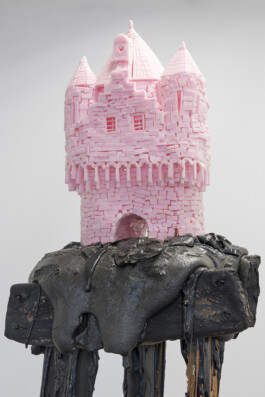
At its core is the work of Dutch artist Folkert de Jong (*1972), whose sculptural installations made from such volatile materials as polyurethane foam and Styrofoam are as disturbing as they are fascinating. His works are grotesque, colorful, and almost playful – offering a deep insight into the human abyss of power, violence, and trauma.
De Jong's works demonstrate how collective memory is literally inscribed in the body and how fragile and vulnerable this memory can be at the same time. The choice of fragile materials, not designed to last forever, illustrates the power of experience and history on people.
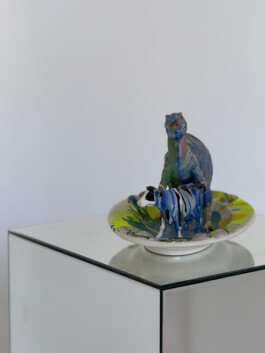
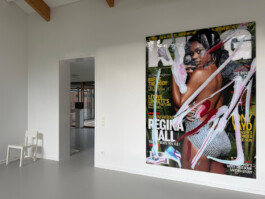
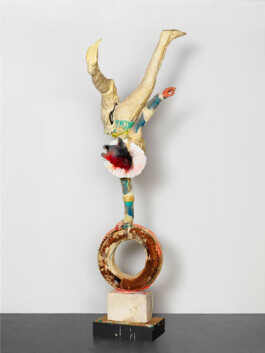
The exhibition brings de Jong's works into a dialogic relationship with works from the Reinking Collection – a collection characterized by curiosity, openness, and a deep interest in artistic forms of expression. A collection that is not only based on aesthetic choices but unfolds an existential world of images: full of symbols, ruptures, myths, and metaphors. Here, collecting becomes an existential gesture – an attempt to grasp the unspeakable, to touch history, to reflect oneself. In this sense, collecting is also a practice of being human: questioning, searching, remembering.
The relationship between artist Folkert de Jong and collector Rik Reinking is more than a curatorial decision – it is a friendly, lively exchange. Both are united by their interest in the great narratives of humanity, in the cracks and masks of Western civilization, in the question of how art can touch the body, history, and spirit simultaneously. The works in the exhibition therefore do not stand side by side, but enter into a genuine, tense dialogue: between materiality and concept, between seduction and exposure, between past and present.
Each room of this exhibition is a chapter – a space for thought, a field of experience. It is about what remains and what dissolves. About the fleeting, the captured, the transformed. You Cannot Say Goodbye to a Myth – the title says it all. Myths don't disappear. They transform, living on in new images, new readings, new contexts. They are tools of interpretation and power – but also of hope. And they remain part of what defines our cultural identity.
Especially in an age when artificial intelligence generates images, when reality is simulated, and digital surfaces determine our lives, this exhibition should remind us of something fundamental: art is also physical. It has mass, resistance, presence. It challenges us – sensually, emotionally, intellectually. Art creates a space in which the world happens – and in which we can encounter ourselves.
This exhibition is therefore an invitation:
to marvel, to think, to feel. To engage in dialogue with the works, with history, and, ideally, with ourselves.
MAY 2025 - JANUARY 2026
YOU CANNOT SAY GOODBYE TO A MYTH
FOLKERT DE JONG IN DIALOGUE WITH WORKS FROM THE REINKING COLLECTION


What does collecting art actually mean?
It is far more than just accumulating things. It is a deeply human act, an act of connection, driven by curiosity, memory, and the search for meaning. A collection creates resonant spaces in which works of art interact with one another, meanings unfold, and worlds emerge.
"Es weltet!" or "Being in the world"—this is what the philosopher Martin Heidegger calls the fundamental mode of human existence. He emphasizes that subject and world are inextricably linked. Being, therefore, is not mere existence, but the understanding of being.
Works of art are things charged with human experiences and emotions. Engaging with, and especially collecting, art is thus a process in which meaning, time, history, and humanity are condensed. In this sense, engaging with art is not a solitary event, but an event that produces "world" in the best Heideggerian sense.
The exhibition You Cannot Say Goodbye to a Myth invites visitors to experience this opening of the world – through 16 rooms, 16 stations, and 16 moments of engagement with art. It presents a dialogue about the body and history, about memory and myth, about transience and transformation.
At its core is the work of Dutch artist Folkert de Jong (*1972), whose sculptural installations made from such volatile materials as polyurethane foam and Styrofoam are as disturbing as they are fascinating. His works are grotesque, colorful, and almost playful – offering a deep insight into the human abyss of power, violence, and trauma.
De Jong's works demonstrate how collective memory is literally inscribed in the body and how fragile and vulnerable this memory can be at the same time. The choice of fragile materials, not designed to last forever, illustrates the power of experience and history on people.
The exhibition brings de Jong's works into a dialogic relationship with works from the Reinking Collection – a collection characterized by curiosity, openness, and a deep interest in artistic forms of expression. A collection that is not only based on aesthetic choices but unfolds an existential world of images: full of symbols, ruptures, myths, and metaphors. Here, collecting becomes an existential gesture – an attempt to grasp the unspeakable, to touch history, to reflect oneself. In this sense, collecting is also a practice of being human: questioning, searching, remembering.
The relationship between artist Folkert de Jong and collector Rik Reinking is more than a curatorial decision – it is a friendly, lively exchange. Both are united by their interest in the great narratives of humanity, in the cracks and masks of Western civilization, in the question of how art can touch the body, history, and spirit simultaneously. The works in the exhibition therefore do not stand side by side, but enter into a genuine, tense dialogue: between materiality and concept, between seduction and exposure, between past and present.
Each room of this exhibition is a chapter – a space for thought, a field of experience. It is about what remains and what dissolves. About the fleeting, the captured, the transformed. You Cannot Say Goodbye to a Myth – the title says it all. Myths don't disappear. They transform, living on in new images, new readings, new contexts. They are tools of interpretation and power – but also of hope. And they remain part of what defines our cultural identity.
Especially in an age when artificial intelligence generates images, when reality is simulated, and digital surfaces determine our lives, this exhibition should remind us of something fundamental: art is also physical. It has mass, resistance, presence. It challenges us – sensually, emotionally, intellectually. Art creates a space in which the world happens – and in which we can encounter ourselves.
This exhibition is therefore an invitation:
to marvel, to think, to feel. To engage in dialogue with the works, with history, and, ideally, with ourselves.
Works by the following artists can be seen:
Steven Allan, Hermine Anthoine, Arman, Joseph Beuys, Alexandra Bircken, Jonathan Borofsky, Michael Buthe, Lawrence Caroll, César, Dinos & Jake Chapman, Mat Collishaw, Henry Coombes, Folkert de Jong, Madeleine Dietz, Felix Droese, Francois Dufrene, Jimmie Durham, Henrik Eiben, Frida Collective, Pachet Fulmen, Barnaby Furnas, Anna Gaskell, Isa Genzken, Till Gerhard, Rodney Graham, Jessica Jackson Hutchins, Son Jongjun, Edward Kienholz, Henning Kles, Douglas Kolk, Josephine Meckseper, Seung Ah Paik, Wolfgang Petrick, Mirko Reisser, Kirstine Roepstorff, Karl-Heinz Rummeny, Reiner Ruthenbeck, Werner Schreib, Markus Selg, Dirk Skreber, Agathe Snow, Daniel Spoerri, Dimitris Tzamouranis, Timm Ulrichs, Ben Vautier, Jacques Villegle, Wolf Vostell, Kelley Walker und Andy Warhol
来Instagram关注我们
WOODS ART INSTITUTE
地址:GOLFSTRASSE 5, 21465 WENTORF near HAMBURG
INFO@WOODSARTINSTITUTE.COM
@woodsartinstitute AUF INSTAGRAM